blog

Sybase marketing portraits

This past Thursday morning I shot three young women from the Sybase sales and marketing teams here in Waterloo. Here are a few examples of the portraits from that shoot, featuring Carolyn who is on the marketing team for the Sybase Unwired Platform (SUP). The glass blocks at the entrance to the firm’s cafeteria form an interesting background, with the glass exhibiting an olive-green hue from the ambient light in the late morning. For this shot, I used a three-light setup: a large softbox on my Novatron 500 mono light at 45 degrees for the main light, a smaller softbox, also using a Novatron 500 mono light, higher and to the left of the camera as fill, and a smaller, screw-in bulb slave for use a a hair-light. I had to be particularly careful with the main light to avoid its reflection in the glass blocks. Some experimentation confirmed that Carolyn’s photogenic side was the left, and we stuck with that orientation throughout the shoot. In this shot, at left, I’m once again using my Canon 7D with 24-105mm lens,

Read More »

The Master Photographer’s Toning Book

Recently I purchased a copy of Tim Rudman’s The Master Photographer’s Toning Book [1] from Silverprint in the UK. Thanks to Silverprint, this “definitive guide” to toning gelatin silver and platinum prints is now in its second printing, and thank goodness it’s now in print once again. This book is really a superb resource. Here’s a brief synopsis from Tim Rudman’s website: Using a system of First Steps, Second Steps and Further Steps, the normal use of simple ‘off-the-shelf’ toning kits is explained and then developed further by exploring the more advanced and less familiar techniques for which they may be employed. Each theme is then expanded to include instructions and formulae for home-made toners that both save money and further expand the reader’s creative options. Processes and techniques described include the use of all the common and less common toners both singly and in combination, multi toner kits, selective toning, archival and negative toning, simple and advanced uses of bleaches and developers, dyes and the use of less conventional materials such as tea and coffee. Sections on print finishing

Read More »

Helping Hands

I’ve received a number of questions about the print that is framed for the inaugural Sybase Waterloo Community Service Award, so I thought I’d post the details here. The models were Marketing Events Manager Christine Weber and retired employee Dagmar McIntosh. Christine and Dagmar’s hands were photographed against a white backdrop tilted at 45 degrees and lit by two Novatron 500 strobes with umbrellas. Their hands were lit with a single Novatron 500 strobe with a snoot to prevent lens flare. For this shot, I used my Mamiya C330S TLR with a 180mm lens (no filter), 1/500 sec at f/11 on Ilford FP4+ film which was then developed with Ilford ID-11. The 11×14 print used Ilford FB with a matt finish, which was developed in Ilford Multigrade developer and toned first in Kodak selenium. After a 60-minute wash, the brown toning effect was subsequently applied by toning the finished print in tea with constant agitation (8 bags of Red Rose Orange Pekoe in 2L of water) for a period of 3 minutes. The print was then washed again for 30

Read More »

Daring to Look

Since I was ill for much of the summer months I decided to spend my spare time reading about photography if I couldn’t actually go out and shoot. Fortunately there are a number of new and excellent books on photography out this year, and Daring to Look [1] is one of them (I’ll write about others in future posts). In Daring to Look, Anne Whiston Spirn presents and analyzes Dorothea Lange’s 1939 work for Roy Stryker and the US Farm Security Administration (FSA). Unlike other retrospectives I’ve seen of Lange’s work, Spirn includes not only the portraits Lange is known for but the landscape images and field notes that she took as well. The result is a much more in-depth look at a body of work tremendous in scope, taken by a photographer of not only significant talent but also one with a tremendous social conscience and awareness. In this volume, Spirn documents Lange’s attempts to explain in words the context behind the photographs and how the two are arguably more powerful than the images or text alone. Here’s an

Read More »

Sea landscapes by Michael Berman

Each issue, my Lenswork subscription inspires me with incredible images and their stories, along with the stories of the photographers who make them. And so it is with marine photographer Michael Berman who is based in Port Ludlow, Washington. Mr. Berman’s work was featured in Lenswork issue 88 (May-June 2010). Michael Berman’s sailing images are simply breathtaking. But it’s not his sailing images that I wanted to comment on. Rather, I would like to draw your attention to his Open Ocean series that’s also available on his website. These images are in colour, though when reproduced in Lenswork they appeared in black-and-white. I love to photograph the prairie landscape. There’s a reason why the slogan “Land of Living Skies” appears on Saskatchewan license plates. But the prairie landscape is also a real challenge because so often its landscape is nearly featureless, at least from a distance, so much so that it can be very difficult to compose a landscape photograph that has a foreground, a middle, and background. But look at Berman’s Open Ocean images. You can hardly find a

Read More »

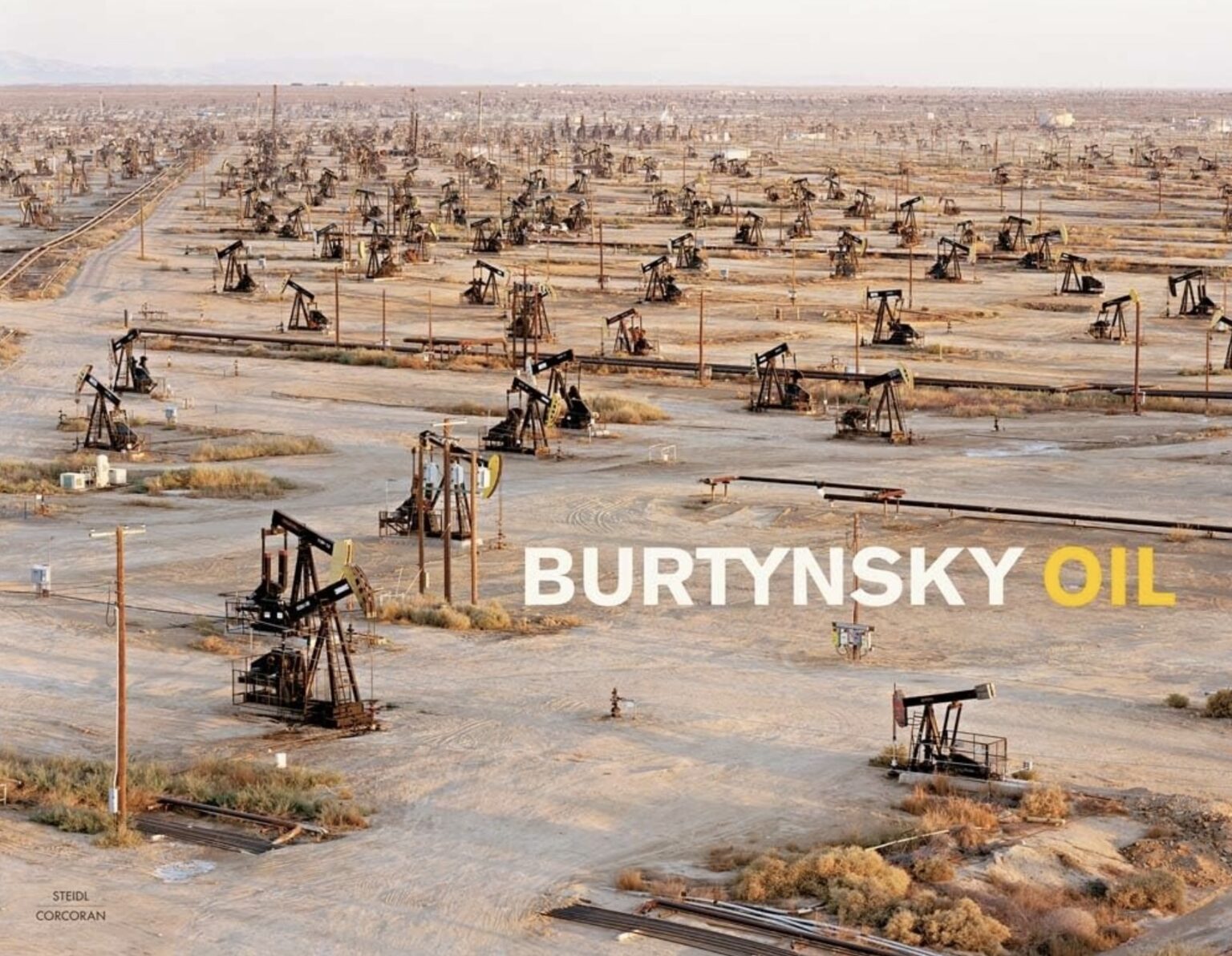
Oil

While on holiday the past two weeks I had the privilege to view Edward Burtynsky’s exhibition, “Oil”, at The Rooms Museum and Art Gallery in St. John’s, Newfoundland. Subsequent to the exhibition in St. John’s, Oil will be exhibited at the Art Gallery of Alberta, in Edmonton from September 18, 2010 through January 2, 2011. Oil explores one of the most important subjects of our time by one of the most respected and recognized contemporary photographers in the world. Edward Burtynsky has travelled internationally to chronicle the production, distribution, and use of this critical fuel. In addition to revealing the rarely-seen mechanics of its manufacture, Burtynsky photographs the effects of oil on our lives, depicting landscapes altered by its extraction from the earth and by the cities and suburban sprawl generated around its use. He also addresses the coming “end of oil,” as we confront its rising cost and dwindling availability. Oil encompasses themes that have been explored in more specific Burtynsky exhibitions, including images depicting the reduction to scrap of oil tankers in Bangladesh, and images of the North

Read More »
Scroll to Top